October 2026
Filled in
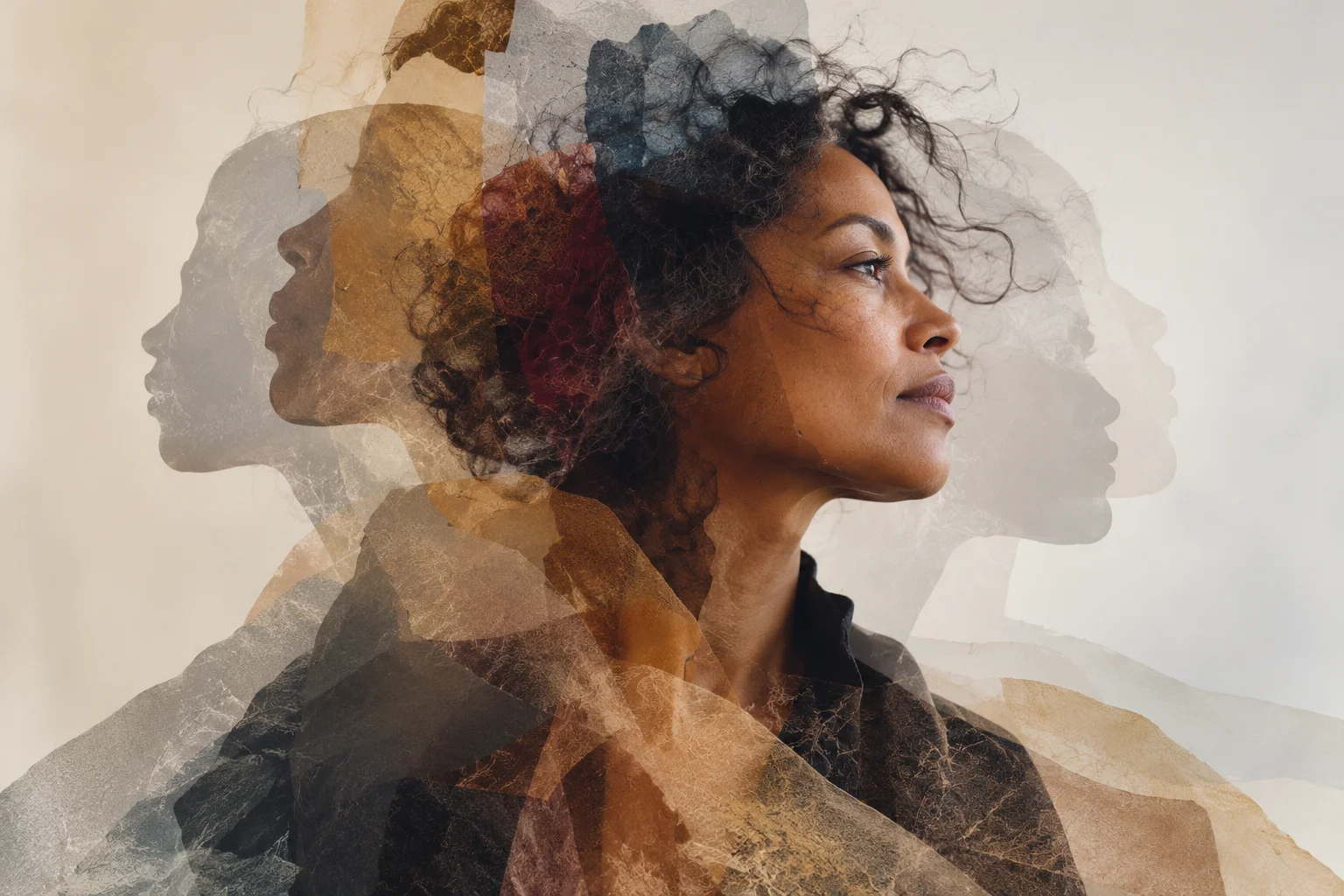
“We, black people.” Those words were spoken in the museum café, after a visit to the Suriname Museum and The Black Archives. I was addressed as a self-evident part of a group. And I did not entirely recognise myself in it.
I have Surinamese-Creole, Surinamese-Hindustani, Chinese and Portuguese roots. When I said so, the question came: how do people see you when you walk down the street?
It doesn't matter how others see me, I said. What matters is how I see myself.
That answer came too quickly. The gaze of others has consequences, for how I am treated and which doors open. That gaze exists. I just don't want it to have the final say about who I am.
In The Black Archives I had just seen how many voices there are: black artists and authors, Surinamese literature, books about Africa, racism, indigenous wisdom and winti. Far more than the story recorded from a Western, colonial perspective. That richness gave me room to read my own story differently too.
Knowing where you come from can root you. But a root is not a fence.
A shared “we” can give strength. Those who experience injustice because of skin colour, faith or gender can together demand recognition and force change. That is standing up for what is right. Whoever seeks connection must also dare to look at injustice.
Knowing where you come from can root you. But a root is not a fence.
My discomfort begins where, within a “we”, there is no longer room to think differently. And where “they” become people whose meaning we believe we already know. Then we no longer ask; we fill in.
Then I saw that I was doing exactly that myself. In the conversation I thought I heard victimhood, and with that my judgement was already in place. I filled in. Perhaps that is why I did not truly hear what that connectedness meant to the other person. The other's freedom to find meaning in it is the same freedom I ask for myself.
What happened in that café happens everywhere in society. We hear a position and think we already know what lies behind it. The distance then grows not because we disagree, but because we no longer ask.
Policy fills in too. Not out of ill will, but with the best of intentions, as I did in that café. There too is a we and a they: we who make the rules, they to whom they apply. Along the way a person becomes a target group, then a file, and finally an exception. Much has been said in recent years about the human scale. But who actually asks what someone needs? And what do we do when the answer doesn't fit the regulation? Then it chafes. That friction is not noise, but information. It asks for an attitude: keep looking, keep reflecting, keep learning.
There are participation processes in which citizens are involved in policy, and moral deliberations in which ethical dilemmas are explored. With the Human Compass I want to explore a different entry point. The starting point is a person who is stuck, who comes to the table together with the organisations involved. We and they at the same table. First listening to what is really going on. Then exploring together where it pinches: in rules, in systems, in assumptions that were filled in along the way. Not to point out the guilty, but to understand what is happening and what we can do differently.
That is what matters to me, in policy and beyond: meeting someone with a question, not with an answer. Including someone I first saw as “they”.